Table of Contents
The humble safe hasn't changed much in a century. But the world around it has. Today, a safe is no longer just a metal box with a lock — it's a connected security device.
What Makes a Safe "Smart"?
Three capabilities define a truly intelligent safe: Remote access & monitoring — check status, lock/unlock via smartphone app, receive tamper alerts, view access logs. Multi-factor authentication — fingerprint recognition, WiFi app control, and mechanical key override. Emergency power — USB-C port for standard power bank access when batteries die.
Our Smart Safe Lineup
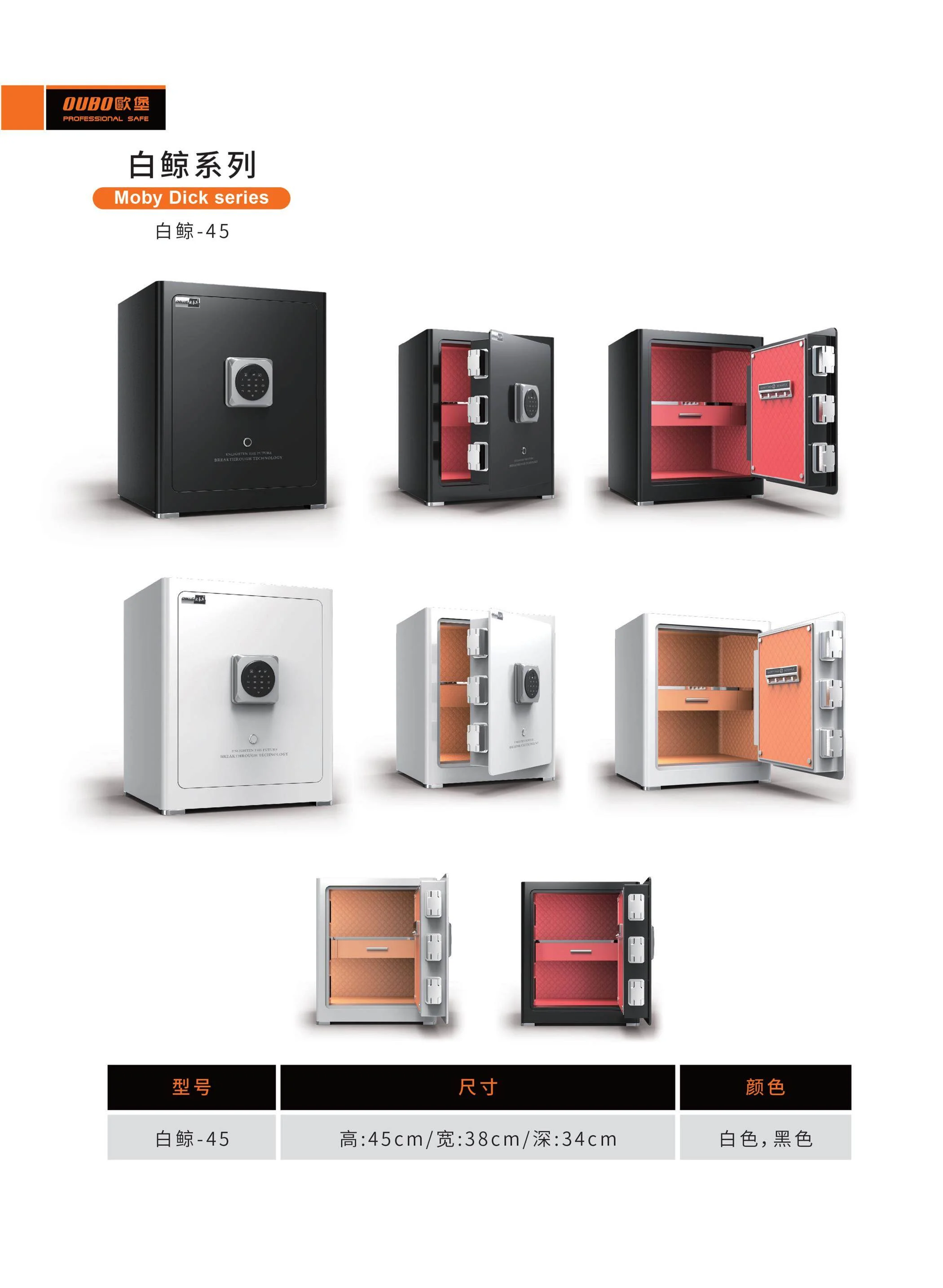
| Beluga-45 | Luxury home/office, WiFi + Fingerprint |
| K1-250 | Hotel/budget, LCD Keypad, 250L |
| A3-60 | Commercial, Triple Lock, 10mm Steel |
Specifying a Safe: What the Numbers Mean
Those capabilities say what a safe can do; the specifications say what it is.
| Model | Capacity | Door & body | Opening methods | Power supply | Net weight |
|---|---|---|---|---|---|
| Beluga-45 | 45L | 5mm door, cold-rolled steel | WiFi app / fingerprint / key override | 4×AA batteries / USB-C emergency | 32kg |
| K1-250 | 250L | 5mm door, cold-rolled steel | LCD keypad / key override | 4×AA batteries / USB-C emergency | 48kg |
| A3-60 | 60L | 10mm body / 12mm door, cold-rolled steel | Triple lock system / key override | Electronic panel / key | Approx. 85kg |
Door thickness, locking points and capacity
Door thickness is the first figure worth reading: Beluga-45 and K1-250 use a 5mm door on a cold-rolled steel body, while A3-60 moves to a 12mm door on a 10mm cold-rolled steel body with a triple lock system. Note that capacity and weight do not move together — K1-250 holds 250L at 48kg, A3-60 holds only 60L but weighs about 85kg.
Anchoring, power and the audit trail
All three models have pre-drilled anchor holes and ship with the mounting hardware, so a floor or wall fixing is part of the plan. It matters most for the lightest model, since 32kg is still a box that can be carried.
Beluga-45 and K1-250 run on 4×AA batteries with a USB-C emergency port, and K1-250 needs no wiring at all; A3-60 uses an electronic panel with a key. Only Beluga-45 keeps an access log in an app.
Hotel, Office or Home: Matching the Safe to the Setting
The three capabilities are the same everywhere. The weighting is not.
Hotels: high turnover, temporary access
A hotel safe is opened by a different person every few nights, so it needs a code that can be reset between guests and no wiring run into every room. That is the K1-250 brief: 250L, an LCD keypad, battery power.
Offices: shared permissions and a record
An office safe is shared, and somebody has to be able to say who opened it, so decide which roles hold standing access and review the list when staff change. Beluga-45 covers this in software, through app-controlled access with audit logs and multiple fingerprints.
Home and high-security rooms
At home the constraint is usually placement: a safe that has to be dragged out of a cupboard will not be used. Beluga-45 is the smallest at 380 × 360 × 580mm, K1-250 the largest at 600 × 480 × 900mm, A3-60 in between at 450 × 420 × 680mm. Where the risk is a determined attempt, A3-60 adds a 12mm door on a 10mm cold-rolled steel body and a triple lock system.
What Connectivity Changes in Daily Operation
Adding WiFi does not change what the steel does. It changes three routines and adds one fallback.
- Status checks replace walk-arounds: the app shows status, and the access log answers who was in it.
- Alerts arrive without anyone watching: a tamper alert is the first response.
- Permissions can be withdrawn, not just changed: remove one fingerprint when a role changes instead of retiring a shared code.
- Every connected function needs a manual fallback: a key override on all three models, and USB-C emergency power on the two battery models — plug in a power bank when the 4×AA batteries die.
The maintenance is ordinary: check that WiFi reaches the room the safe stands in, keep the emergency key out of the safe, test the emergency power path on a schedule, and record when the batteries are changed.
Frequently Asked Questions
What makes a safe "smart"?
Three capabilities define a truly intelligent safe: remote access and monitoring, multi-factor authentication, and emergency power.
What does remote access and monitoring let you do?
It lets you check status and lock or unlock via a smartphone app, receive tamper alerts, and view access logs.
Which authentication methods does an intelligent safe combine?
Multi-factor authentication: fingerprint recognition, WiFi app control, and mechanical key override.
How do you open a smart safe when the batteries die?
Emergency power: a USB-C port for standard power bank access when batteries die.
Which models are in the smart safe lineup?
Beluga-45 for luxury home and office use with WiFi and fingerprint access, K1-250 for hotel and budget use with an LCD keypad and 250L capacity, and A3-60 for commercial use with a triple lock and 10mm steel.
Why is smart security no longer a luxury?
The humble safe hasn't changed much in a century, but the world around it has. Today, a safe is no longer just a metal box with a lock — it's a connected security device.
What should I check before specifying a smart safe?
Door thickness and locking points; whether the unit can be anchored, which all three models allow through pre-drilled holes and included hardware; how a low battery is signaled; whether the opening record is an audit trail; and the room itself, because humidity swings are hard on an electronic lock.
How does a hotel safe differ from an office safe?
Hotel use turns on turnover: a code cleared at checkout and an installation that needs no wiring, which is what K1-250 offers with 250L, an LCD keypad and 4×AA battery power. Office settings turn on a record of who opened the safe, which Beluga-45 supports through app-controlled access with audit logs.
Choosing the Right Smart Safe
Beluga-45 for luxury home and office use with WiFi and fingerprint access, K1-250 for hotel and budget deployments with an LCD keypad and 250L capacity, and A3-60 for commercial installations with a triple lock and 10mm steel.
Browse All Safes →Questions? alex@syprointl.com | +86 177 1055 7225
By environment: Archive & vault · Museum storage · Library special collections · Film & AV archive